.svg)
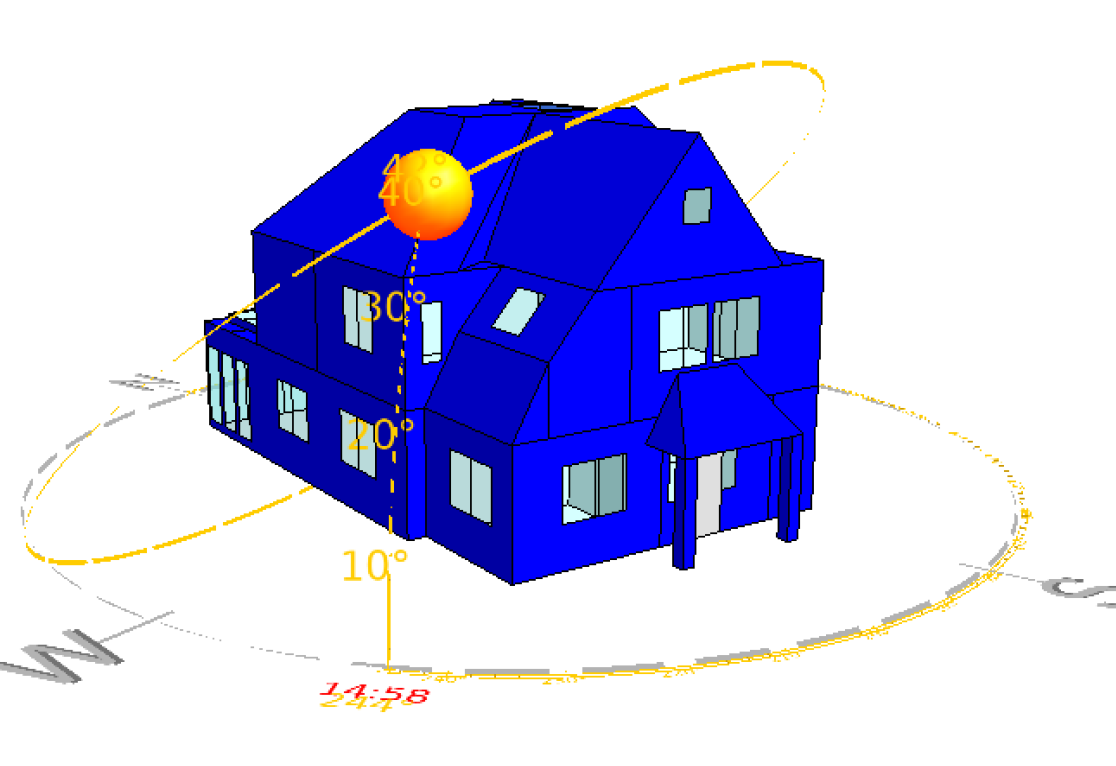
To get a quote for SAP calculations, simply give us a call on 01827 284488, or fill in our contact form and a member of our team will be in touch shortly.
We require the following details to provide an accurate survey price:
Once you've accepted our quote, we’ll just need your invoicing details. And you'll receive the report with 5 working days.
Get my free quote now
SAP ratings range from 1 to 100+, where 100 represents zero energy cost and higher scores indicate better energy efficiency. This scoring system provides an intuitive way to understand a property’s energy performance, with each point representing measurable improvements in efficiency.
Properties scoring above 100 are net energy exporters, generating more energy than they consume through renewable technologies and exceptional thermal performance. These high-performing dwellings demonstrate the potential for residential buildings to contribute positively to the energy grid rather than simply consuming resources.
The sap rating considers multiple performance factors working in combination. Construction methods determine baseline thermal performance, while heating systems and their controls affect energy consumption patterns. Internal lighting specifications and renewable technologies can significantly boost ratings by reducing overall energy demand.
Energy used for space heating, water heating, lighting, and ventilation systems forms the core of sap calculations measure assessments. Each element receives detailed analysis, with the heating system often having the most significant impact on overall energy efficiency rating performance.
SAP ratings directly inform Energy Performance Certificates (EPC) that buyers and tenants review before making property decisions. A higher sap score translates to better energy performance certificate epc ratings, potentially increasing property values and marketability while reducing long-term energy cost burdens for occupants.
If you have been told you need an ecological survey for a planning application or development project, it can feel like yet another piece of confusing jargon. The term sounds technical, the process is often unclear, and the last thing you want is another tick-box exercise that delays your plans. In reality, an ecological survey is simply a structured way of checking whether your project could harm protected species or important habitats, and when it is done properly it can actually save you time, money and stress.
An ecological survey is an organised inspection of a site and its surroundings to understand what habitats and wildlife may be present. An ecologist visits the land, records the types of habitats on and around it, and looks for evidence of, or potential for, protected species.
The first stage is usually a general overview called a Preliminary Ecological Appraisal, where habitats such as grassland, hedgerows, woodland, ponds or buildings are mapped and assessed. If the ecologist finds signs or good potential for protected species such as bats, great crested newts, reptiles, badgers or breeding birds, they will recommend more targeted surveys to gather the detailed evidence your planning authority needs.
-min.jpg)


Professional ecological surveys and reports to support planning applications across the UK.

Most people first hear about ecological surveys from their architect, planning consultant or the local planning authority. When you submit a planning application, the council will check whether your site is in or near habitats that are likely to support wildlife, such as woodland, ponds, rivers, hedgerows, rough grassland or green corridors. They may also look at aerial photographs, mapping and previous planning history.
If there is a reasonable chance that your proposals could affect wildlife, they will expect an ecological survey and report to be submitted with the application.
You are more likely to need an ecological survey if your project involves new buildings, significant extensions, changes in land use or large scale landscaping. Even small and seemingly ordinary sites can be important, particularly where there are mature trees, old buildings, ponds, watercourses, gardens backing onto open land or links to the wider countryside.
In those situations, protected species such as bats or nesting birds are often present. The ecological survey provides the planning authority with professional evidence that you have identified these risks and considered how to deal with them.
An ecological survey usually begins with a short desk study. The ecologist collects existing information about the area, such as records of protected and notable species, details of nearby wildlife sites and aerial imagery that shows how the land is used. This gives a good sense of what might be found before anyone sets foot on site. Next comes the site visit, where the ecologist walks the land to map habitats, assess their condition and look for signs of wildlife.
They pay close attention to features that are particularly important for biodiversity, such as hedgerows, trees with cavities, ponds, ditches, old buildings, bridges and culverts. During the visit, the ecologist is not usually trying to count every individual animal. Instead, they are assessing the potential for the site to support protected species and looking for evidence that they are present. For example, they might note that certain buildings or trees have features suitable for roosting bats, that there is a pond within range for great crested newts, or that there are areas of rough grassland suitable for reptiles.
Based on this information, they can judge whether further, more detailed surveys will be needed, and what type and timing of surveys would be appropriate.The findings are set out in a written report, which describes the site, explains what was done, and summarises the habitats and features found.
The report assesses the likely impact of your proposals on wildlife and recommends any follow-up survey work, mitigation, compensation or ecological enhancements. It is this report that the local planning authority will use when considering the ecological aspects of your application.
It is easy to see an ecological survey as something that only creates problems, but in practice it can be one of the most useful tools for managing risk in a project. By commissioning a survey early, you can identify ecological constraints while there is still time to adjust your design, reposition buildings, protect key features or plan realistic timescales for any follow-up surveys that must be done in specific seasons.
For example, you might discover that bat activity surveys or great crested newt surveys are needed and can only be carried out in certain months. Knowing this early allows you to plan around these windows, rather than being caught out at the last minute.
Good ecological advice also helps you avoid unexpected costs and delays. Poor quality or last-minute surveys often result in the local authority asking for more information or rejecting reports that do not meet standards. This leads to resurveying, redesign and extended planning timescales. A well-prepared survey and clear, practical recommendations give the council confidence that impacts on wildlife will be properly managed and that any necessary mitigation or enhancement will be built into the project.
An ecological survey is not designed to stop development in most cases. Instead, it is there to help you avoid or reduce harm where possible and then to compensate and enhance where needed. That might mean retaining a hedgerow, protecting a pond, designing sensitive lighting to avoid disturbing bats, or adding simple measures such as bat and bird boxes and new planting.
These are often straightforward and inexpensive when planned early, and they can improve the look and feel of the finished scheme.
If you are applying for planning permission and have been advised that ecology is a consideration, the honest answer is that you probably do need an ecological survey. The important thing is to treat it as a positive step, not a hurdle.
By working with a professional ecologist, you get clear information about what is on your site, what needs to be done and how it can be integrated into your project. With the right support, ecological surveys become a manageable and constructive part of delivering development that is both compliant and sensitive to the wildlife around it.
If you have been told you need an ecological survey, the best next step is to share your site address, a brief description of the proposed works, any planning reference or ecology-related comments, and, if you have them, photos or plans of the building or trees in question.
We will review the information, advise what survey is appropriate for your project and provide a clear fixed-fee quote for the survey and report.



.svg)

.svg)
.svg)
.svg)


